Showing posts with label bacteria. Show all posts

Thursday, 5 September 2013

Extremophiles: life in extreme places


Underwater volcanoes, arctic tundra and the reactor at Chernobyl- what do these places have in common? As strange as it might seem, they are the ideal living conditions for several different microorganisms. Think humans are the best at colonising Earth? Think again.


Deadly Radiation Levels: Chernobyl


The exploded reactor at Chernobyl (source)
About 70 miles away from Kiev in Ukraine lies the ruined reactor of the Chernobyl nuclear power plant and the eerie abandoned city of Prypiat.  In April 1986 during a security test at the plant, a huge explosion tore through the nuclear reactor, throwing its 1200 tonne cover high into the air, carrying with it a cloud of radioactive graphite dust and exposing the surrounding areas with lethal levels of radiation. To this day the clean-up of the fallout from this incident continues and a 2,600 exclusion zone has been put in place where no people live except for about 170 samosely – or settlers - who remained behind after the incident. Nobody is quite sure how many people died as a result of the power plant disaster, but estimates go as high as tens of thousands.


Given the catastrophic nature of this incident and the hostility of the area around the plant, it’s pretty surprising that it has been discovered in the last few years that black pigmented fungi grow and actually thrive on the walls of the broken down reactor. Normally gamma radiation (the most harmful form of radiation, the type given off by unshielded nuclear reactors and exploded atom bombs) causes irreparable damage to the DNA of living organisms, rendering them unable to function or reproduce.


The iconic radiation warning at Prypiat (source)
Turns out that the amazing ability these fungi have to thrive in these conditions is down to melanin- the same stuff that gives us moles and freckles. Along with many other organisms, some fungi produce melanin, which gives them a characteristic black colour. Scientists believe that these fungi use melanin to convert the deadly gamma radiation from the crippled reactor to energy they can use to grow. Lab tests with one such fungus, called Cryptococcus neoformans (I’m trying to spare the meaningless unpronounceable Latin names, but apparently us microbiologists are sticklers for it – sorry) showed that it grew three times faster than normal at 500 times the normal radiation found on Earth’s surface.


So, that’s the crazy radiation-munching fungi dealt with – let’s move on to heat, and another awesome environment.


Extreme Temperature and Pressure: Deep Sea Hydrothermal Vent Fields
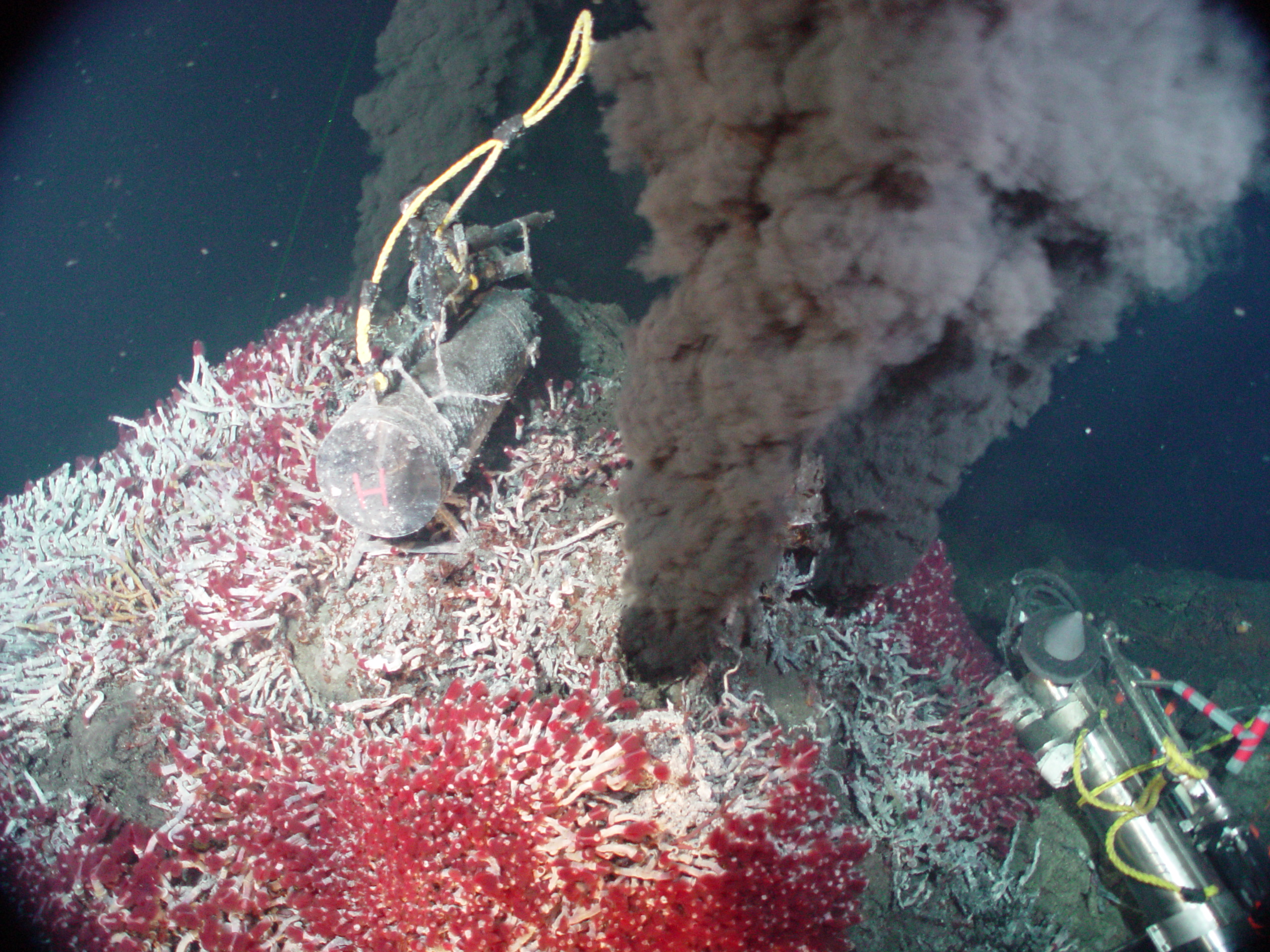

A black smoker. I'd make a joke but it wouldn't be clever or funny (source)
Hydrothermal vent fields are probably some of the most hostile places on earth and they are freaking awesome. Uhh… that wasn’t very scientific – they are quite interesting. Better? Anyway, hydrothermal vents are holes in the Earth’s crust in volcanic regions which spew mineral rich water heated by molten rock. When this material hits the cold water some of it solidifies creating a chimney through which dissolved minerals issue like white and black smoke. These chimneys, not surprisingly, are called black smokers and white smokers. 


The water in these places can reach temperatures up to 400 degrees and the pressure is several times that of the surface, but amazingly they are some of the most life-filled places in the deep sea.  Discovered in 1970, these vents are relatively new to science, but in spite of this over 300 species have been identified in vent fields – more than 280 of which were completely new to science. The combined biomass (the total mass of living things) in these vent fields is estimated to be the same as the rainforest.


The thriving life in these hydrothermal vent fields is made up of bacteria, tubeworms, crabs, slugs, fish and many more. Like all life on this planet, the smallest lifeforms make it all possible. One of the components of the ‘smoke’ spewing out of the vents is hydrogen sulphide – a gas with a characteristic rotten egg smell which is toxic to most life in high levels. This gas is the primary food source for the microorganisms that live there. These microorganisms make up the bottom rung of the food chain, allowing more complex life to survive by feeding on them. These microbes have to be specially adapted to live in such a place, as high temperature and pressure destroy the structure of cells and damage the proteins that make them work – in fact it is temperature and pressure that are used to sterilise laboratory and medical equipment through a process known as autoclaving.The types of microbes that survive down here are ones whose internal components are highly resistant to such damage.


M. kandleri - fascinating AND pretty (source)
One of these microbes, called Methanopyrus kandleri  (sorry!) is the world record holder for life at high temperatures.  M. kandleri is an archaeon – a member of the archea which are similar to bacteria but are quite different at a genetic level and often to live in extreme and methane gas rich environments – either producing it or using it as an energy source. M. kandleri was discovered on the wall of a black smoker vent and grows happily at 110°C and can survive up to 130°C. Science classifies this awesome little bug as a hyperthermophile, meaning ‘extremely high temperature lover’.


Sub-zero Temperatures: Arctic Permafrost


Whenever people think of inhospitable conditions the Arctic tundra is probably pretty high on the list. I keep thinking of arctic explorers fighting their way through blizzard in huge fur coats with their big bushy beards caked with snow… but maybe that’s just me. One critter that loves to live in the arctic permafrost is the fetchingly-named Planococcus halocryophilus. This one is an extreme survival double-whammy. It is capable of growing at ultra-low temperatures and ultra-high salt concentrations.
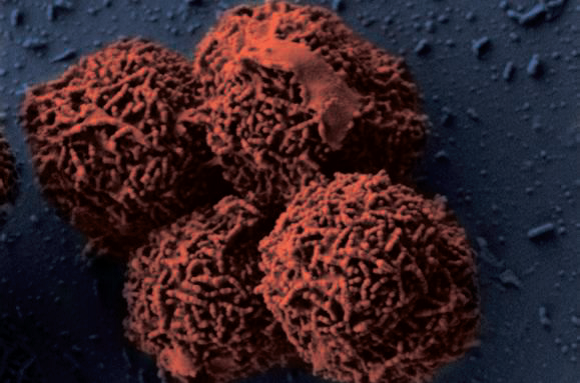

P. halocryophilus in the flesh... or whatever they are made of (source)
P. halocryophilus was discovered in 2011 in the Canadian High Arctic where scientists believe they grow in the permafrost – the frozen soil on the surface of the Arctic. These bugs are reported to live in tiny regions of highly salty water in the permafrost, which creates a particularly demanding environment of high salinity (salt content) and sub-zero temperatures. P. halocryophilus has been shown to grow happily at the ambient permafrost temperature of -16°C and survive up to -25°C and has been referred to as a ‘cold temperature champion’.


Normally bacteria are killed by extremely low temperature when water inside the cells freezes or the temperature slows or stops the chemical processes that keep them alive. When water freezes it tends to form crystals which tear through cell walls and render them useless. Cold-loving bacteria (cryophiles) protect themselves by producing their own kind of antifreeze inside and out which prevents them from freezing solid or being killed by ice crystals. P. halocryophilus is able to survive at such low temperatures by doing just that, as well as being highly adapted to be cold-resistant.


So, if you didn’t before, you now know about three of the world champions of survival, and yes, they are all microbes – in microbiology these are called ‘extremophiles’. “That’s all very well” you might be saying, “but so what?” – which is a fair question. Probably the most fascinating thing about these extremophiles is the fact that they provide us with a window to other worlds. I know, right? I made that sound super dramatic. What I am talking about here is xenobiology – the study of extra-terrestrial life. I’m not talking about the E.T., X-files, take-a-deep-breath-here-comes-the-probe type of extra-terrestrial life, I’m talking about microbes. Some of these extreme environments on earth closely mirror what conditions might be like on other planets and studying the life that thrives in them tells us about the possibility of life on other planets. Microbiologists believe in aliens – who knew?  

As with every article I post here, this one has been thoroughly researched and a list of sources can be provided for anyone who is curious – just check out the contact page.

Tuesday, 13 August 2013

Happy Accidents: 5 Discoveries made by Mistake


Anyone in the science trade will be pretty familiar with what are technically referred to as cock-ups. In fact pretty much anyone in any kind of endeavor will be familiar with the aforementioned ups. And though we like to think of inventors and discoverers as brilliant minds or genius eccentrics, it might surprise you how many great discoveries and inventions came about completely by accident. Some of them might not be so interesting but I've included them probably because their discovery was, well, awesome. Enjoy:

Lysozyme (Bear with me on this one)


alexander fleming, bacteria, invention by accident, science
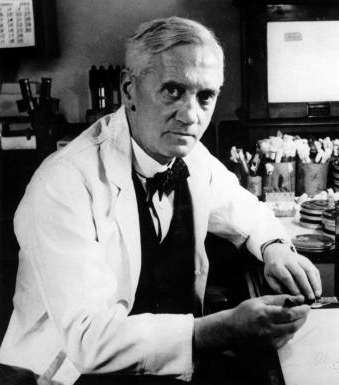
Sir Alexander Fleming pulling a serious face.
(source:
 
http://upload.wikimedia.org/wikipedia/commons/3/3d/Alexander_Fleming_3.jpg)
There are probably a few 'discoveries made by accident' lists on the interweb, but I bet none of them include lysozyme. This wonderful little protein (I’m biased – I worked with this stuff) was discovered by the famous Scottish bacteriologist Sir Alexander Fleming in 1921. Okay, not everyone will be familiar with this stuff and it might take some explaining so bear with me – lysozyme is an enzyme (a protein which performs and aids certain chemical reactions in cells – you can read more about them at how stuff works) which is an important part of the immune system. The human immune system is divided into two parts – innate and specific. While the specific part produced tailored, targeted responses to get rid of specific bugs and other nasties, the innate part is like the front line in a battlefield – it’s a broad spectrum, non-specific weapon against invading bugs. For example, the most important prat of the innate immune defense is the largest organ you have – your skin, as it stops bugs from getting into your blood. I really hope you actually have skin or that was pretty insensitive, sorry. But back to lysozyme:  it is found in three other important parts of the innate defence – tears, sweat and saliva, where it keeps the vulnerable parts of your body free of bacteria by tearing holes in them, causing them to burst open, or lyse – where the name comes from. Without lysozyme floating around in our various juices we would get a lot more infections and probably live much shorter lives.

This one had been a bit ramble-y, but now on to the interesting part – how Sir Fleming discovered it. The story goes that good old Alexander was suffering from a nasty could one day after returning to his lab after the end of world war one and he sneezed on some growing bacteria (one paper I read said a drop of mucus fell from his nose, but I figured sneezing was mercifully less detailed). Fleming noticed a few days later that the bacteria around the drop had been destroyed, leading him to the discovery of lysozyme. From a runny nose to a better understanding of the immune system – not bad, but most people know Sir Fleming for another accidental discovery…

Penicillin


Mold and bacteria fighting it out...
I don't think a funny caption can make this picture exciting.
(source: http://smccd.edu/accounts/case/graphics/staph.jpeg)
Yup, it’s the most famous accidental discovery – the antibiotic that changed the world, discovered by the runny-nosed Scotsman himself. In this case, the phrase ‘cleanliness is next to godliness’ doesn't really hold true, and we should be pretty glad that Alexander Fleming didn't live by this motto. Fleming didn't really keep up with the obsessive cleanliness standards usually required in labs – his working spaces were often somewhat disorganised. One day while sorting through the mess, he saw a mold growing on one of his petri dishes which was supposed to have bacteria growing on it (talk to any microbiologist about this and they will roll their eyes – unwanted fuzziness is a common problem). Normally when a laboratory worker is greeted by such a sight they issue an imaginative stream of swear words and throw the plate away with an exasperated noise and stomp off to have a coffee – but not Sir Fleming. He looked at the plate and noticed that the bacteria didn't grow around the mold (pictured above) which turned out to be the mold Penicillium, which led to the discovery of… you guessed it – Penicillin. It has been estimated that this particular contaminated experiment has saved hundreds of millions of lives. Anyway, here's to Sir Alexander Fleming – the man who won a knighthood and a Nobel Prize by accident.

Coke


coke, discovery by accident, can, drink, john pemberton
It only contained cocaine briefly
(source: http://www.imagemme.com/wp-content/uploads/2011/12/bigcoke.jpg)
Continuing on a pharmaceutical theme, it’s time to talk about coke. Not the powdery illegal kind (well actually… I’ll get to that later), but the fizzy kind that comes in bottles. My background in biology made the first two discoveries on my list come naturally, but I was genuinely surprised by this one when I was researching for this article. But yes, I did say a pharmaceutical theme – coke was originally devised as a headache cure and general health tonic by American civil war veteran and chemist John Pemberton. It’s not really fair to say it was invented by accident, but it certainly wasn't invented to be what it is today. Pemberton came up with many ‘drugs’ to try and make his fortune and he met with little success until he came up with a mixture of sugar, water, bubbles  and an unknown mixture of natural flavorings  Pemberton started by selling his concoction for a few cents a glass at his local pharmacy, but the drink’s popularity rose until it could be sold in bottles where it is now the most popular soft drink in the world. I shall finish this section with two interesting facts about Coca-Cola: it did contain cocaine to begin with (not any more unfortunately) and it is a highly effective spermicide (Yup. Some people actually looked into this).

Viagra - No pictures with this one.


I’m going to try my best to avoid making puns here, but it’s going to be hard. …Anyway… this one probably is the definition of a happy accident: Viagra was discovered in the 1980s by Simon Campbell and David Roberts, two working stiffs chemists working for a pharmaceutical company. They were working on a drug for blood pressure and the heart condition angina (there is probably a joke in there too, but I’m too mature to make it), but discovered it had a particular side effect (that must have been an awkward day at the lab). Hey-presto, Viagra is born. This just goes to show that in the pharmaceutical industry, there is always room for growth- even if there is stiff competition. …I’m sorry. I have put in place rigid rules about such puns since the time of this articles publication.

The Microwave Oven


microwave, old fashoined, percy spencer, discoveries made by accident
The RadaRange - compact and versatile... like
 a taxidermied rhinoceros 

(source: http://www.marketingvp.com/images/radarange.jpg)

The eternal and faithful friend to students and single people everywhere – the microwave oven. What you may or may not know is that the microwave oven was another accidental discovery. In 1939, American engineer Percy Spencer began working in the production of magnetron tubes – powerful electrical components used in radar systems to produce microwaves. One day Spencer was standing in front of one of these almighty tubes and noticed that a chocolate bar in his pocket had melted (apparently safety in the workplace wasn't as big back then as it is now). Having an inquisitive mind, Mr. Spencer decided to investigate and tested out the phenomenon with some popcorn kernels, a portent of things to come, some might say. Another experiment quite literally blew up in his face… well, in his co-worker’s face: he placed an egg in a kettle and placed a magnetron on top of it where one of his colleagues had the misfortune to peek into the kettle out of curiosity just in time to have the egg explode on him.  From there Spencer went on to create the first commercial microwave oven – a monster of a thing called the RadaRange which stood nearly six feet tall and weighed close to 800 pounds which requires specialised plumbing for cooling. Luckily nowadays the microwave oven is an affordable thing which no home or depressing bachelor pad would be complete without. Hooray for Percy Spencer.


That concludes my list of five things discovered by accident. I hope it provided you with some enjoyable distraction. Stay tuned for more delicious sciency goodness every couple of days.

As with every article I post here, this one has been thoroughly researched and a list of sources can be provided for anyone who is curious – just check out the contact page.